      @@@@@@@@@@@@@@@@@@@@@@@@@@@@@@@@
      @@@@@@@@@@@@@@@@@@@@@@@@@@@@@@@@


@@@@@@@@@@@@@@@@@@@@@@@@@@@@@@@@@@@@@@@@@@@@
@@@@@@@@@@@@@@@@@@@@@@@@@@@@@@@@@@@@@@@@@@@@
              =@@@@
              @@@@
             @@@@
            @@@@              @@@@
           @@@@                @@@@@
          @@@@@                 @@@@@
         @@@@@                   @@@@@
        :@@@@                     *@@@@
        @@@@     :@@@@@@@@@@@@@@@@@@@@@@
  @@@@@@@@@@@@@@@@@@@@@@@@@@@@@@@@@@@@@@@
  @@@@@@@@@@@@@@@@=                   @@@@
                                       @`

              [deroad's  blog]
                   [home]
# 2022-07-05 | Rizin 0.4.0
{}
Has been a while since i posted an update on the blog, but is a good time to write
about Rizin 0.4.0 due the new features we have implemented:
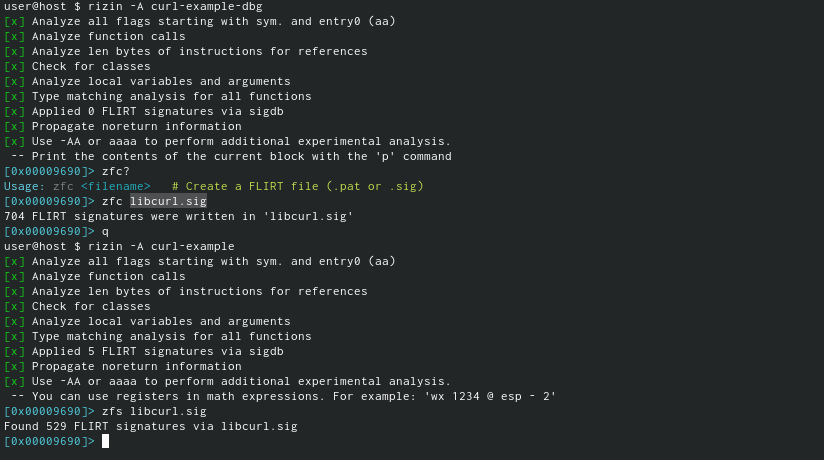
FLIRT files can be used to apply analysis information gathered from one binary to
another one, allowing the reverse engineer to more easily recognize library functions
or standard functions that are usually not binary specific.
Rizin can now create such FLIRT files (both in .pat and .sig extensions), which can be
later applied to other Rizin sessions or even opened directly by IDA.
 BaseFind is a lovely tool that allows, without any structured file format (e.g. ELF) to
find the base address where the raw data is supposed to be run. This can be performed
via the new B command.
BaseFind is a lovely tool that allows, without any structured file format (e.g. ELF) to
find the base address where the raw data is supposed to be run. This can be performed
via the new B command.
rizin -e basefind.progress=true -qc B stm32f103-bluepill.bin
basefind: thread 0: 0x3c000000 / 0x3c000000 100%
basefind: thread 1: 0x78000000 / 0x78000000 100%
basefind: thread 2: 0xb4000000 / 0xb4000000 100%
basefind: thread 3: 0xf0000000 / 0xf0000000 100%
score candidate
-----------------
4 0x08000000
1 0x79ca6000
{}
# References:
Rizin
https://github.com/rizinorg/rizin